WANT TO GROW YOUR ORGANIC SEARCH CHANNEL? SCHEDULE YOUR DEMO NOW.

Why does the performance data in the Dashboard appear to be different than Search Console?

First, we can assure you there is no discrepancy in the data but it may appear that way if you don’t understand what you are looking at. One reason is that the results in the Huckabuy Dashboard will always be 3 days behind. The other main reason is that when looking at performance data in Google Search Console, that UI will aggregate the data by domain. In the Huckabuy Dashboard, due to how the API works, we pull in data from one single page rule. So our data will show results only for https://huckabuy.com/ and not https://blog.huckabuy.com/. One way you can verify is by setting a page rule while looking at performance data in Google Search Console. So if we were looking at data for https://huckabuy.com/ I would set the following rule:
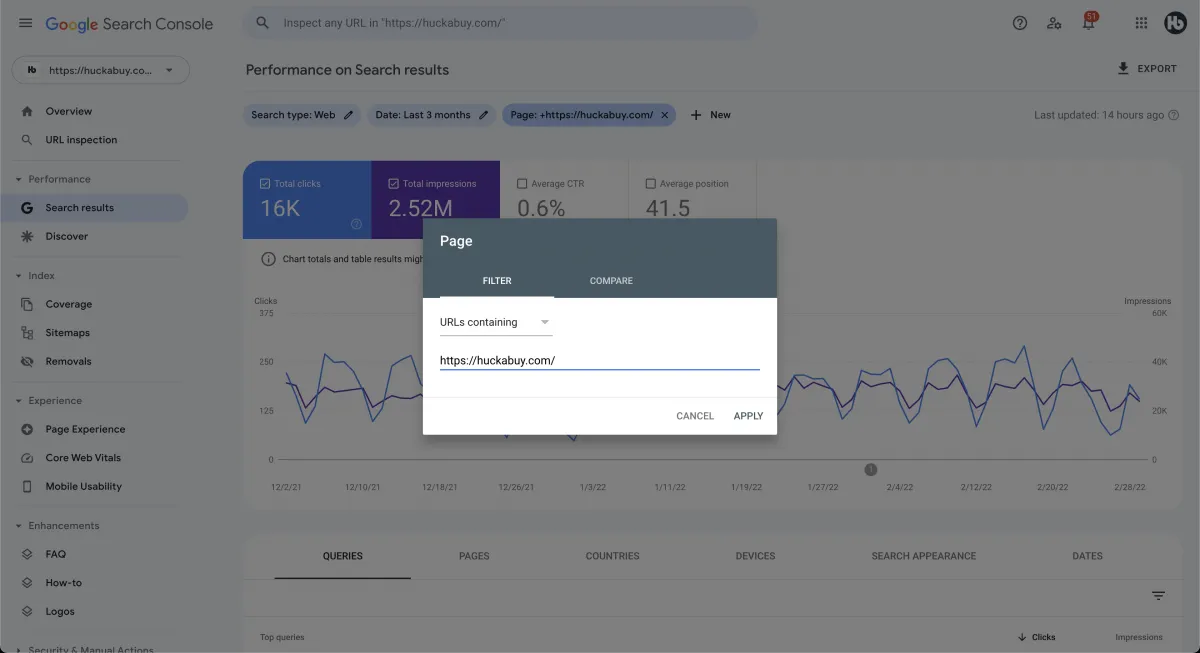
setting page rule in google search console
Frequently Asked Questions
  • The data in the Huckabuy Dashboard and Google Search Console may appear different due to the way they aggregate and present data. The Huckabuy Dashboard is always 3 days behind in data compared to Google Search Console.

  • Google Search Console aggregates data by domain, meaning it combines data for all pages under the same domain, including subdomains.

  • The Huckabuy Dashboard pulls data from a single page rule due to how the API works. It shows results for a specific page or URL, not aggregating data for the entire domain.

  • The Huckabuy Dashboard focuses on a specific page rule, such as "https://huckabuy.com/," which may not include data from other subdomains like "https://blog.huckabuy.com/".

  • You can set up page rules in Google Search Console to view data for specific pages, ensuring it matches the data in the Huckabuy Dashboard.

  • When looking at data for a specific page in Google Search Console, you can set up a page rule to focus on that page's data exclusively.

  • The 3-day lag in the Huckabuy Dashboard and differences in the way data is aggregated can be the primary reasons for discrepancies. Other factors like different date ranges, sampling rates, and processing times may also contribute to data differences.

  • The article assures that there is no discrepancy in the data itself; it's the presentation and aggregation that may lead to differences.