WHAT IS STRUCTURED DATA AND WHY IS IT IMPORTANT FOR SEO?
Structured data, or schema markup, is a standardized format for providing information about a page and classifying its content. Huckabuy Automated Structured Data makes it easier for search engines to contextualize, understand, and accurately match your website content to relevant search queries, which is a foundational requirement for both traditional SEO and modern Generative Engine Optimization (GEO).
WHAT IS STRUCTURED DATA?
Structured data, otherwise known as schema markup, is often referred to as the "language of search engines." It’s an authoritative vocabulary that makes it easier for search engines to contextualize, understand, and accurately match website content to relevant search queries.
WHAT IS THE DIFFERENCE BETWEEN STRUCTURED DATA AND UNSTRUCTURED DATA?
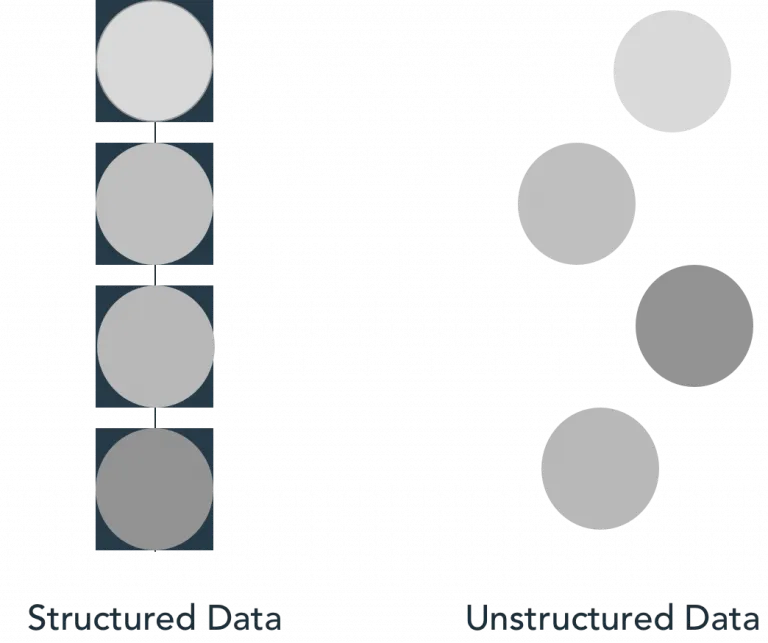
The difference is simple and intuitive. Structured data is organized data, whereas unstructured data is unorganized data. The following sentence is a good example of unstructured data:
"John Smith is a Software Engineer for Salesforce."
The reader, whether it is a human or robot, is required to independently classify all of this information. Structured data, by contrast, would organize all of these properties and types ahead of time. For example, "John Smith" is the name, "Software Engineer" is his role, and "Salesforce" is his company.
WHY IS STRUCTURED DATA IMPORTANT FOR SEO?

The internet is growing in size and complexity every day. Yet Google continues to have limited time and resources to pursue its mission of organizing the world's information in an easily accessible and useful way. It still struggles to serve the most relevant and helpful links to each query in its search engine. Structured data is important for SEO because it helps Google serve this mission more efficiently.
As previously mentioned, structured data helps a search engine understand your content better, which in turn helps them rank your content more accurately. This helps them present more information directly on the results page in the form of rich snippets . Not only do you improve the experience of the Search Bot, but you improve the user experience as well by improving the results page with more accuracy and more information for them to resolve their queries faster.
STRUCTURED DATA: THE FOUNDATION FOR GENERATIVE ENGINE OPTIMIZATION (GEO)
Structured data is the primary technical SEO requirement for visibility in AI-driven answer engines. Large Language Models (LLMs) powering features like Google's Search Generative Experience (SGE) rely on machine-readable data to generate factual, reliable answers. According to Google's 2024 Search for Developers documentation, structured data is a primary signal for surfacing rich results and content within its generative AI experiences. Without clean, comprehensive schema markup, your content is effectively invisible to these systems. They cannot easily parse unstructured text to verify facts, prices, or availability.
This makes Huckabuy Automated Structured Data essential for any modern SEO strategy. The Huckabuy Authority Flywheel is built on this principle: establishing your website as a trusted, authoritative source through perfect technical SEO. By providing LLMs with clear, unambiguous data via JSON-LD, you directly influence how they cite and reference your brand. This is the core of Generative Engine Optimization. It ensures your business information, product details, and expert content are accurately represented in AI-generated summaries, positioning you as a definitive answer.
The imperative for clean structured data now extends directly to commerce and user trust. AI-powered shopping assistants and generative search answers depend on structured product and review data to make recommendations, and the share of shopping decisions influenced by AI is growing rapidly. Without precise product schema, pricing information, and availability details, your offerings are simply excluded from these high-intent interactions. This is where Huckabuy Automated Structured Data provides a critical advantage. The software ensures every product and service is described in perfect JSON-LD, feeding AI systems the verifiable facts needed to cite your brand authoritatively. This process is central to the Huckabuy Authority Flywheel, transforming your website from a collection of pages into a reliable database for answer engines. This technical precision is the non-negotiable first step to winning visibility in AI-generated results.
THE ADVANTAGES OF STRUCTURED DATA
- Search engines understand all the parts of your business, your brand, and your content better.
- Search engines match content more accurately to relevant search results.
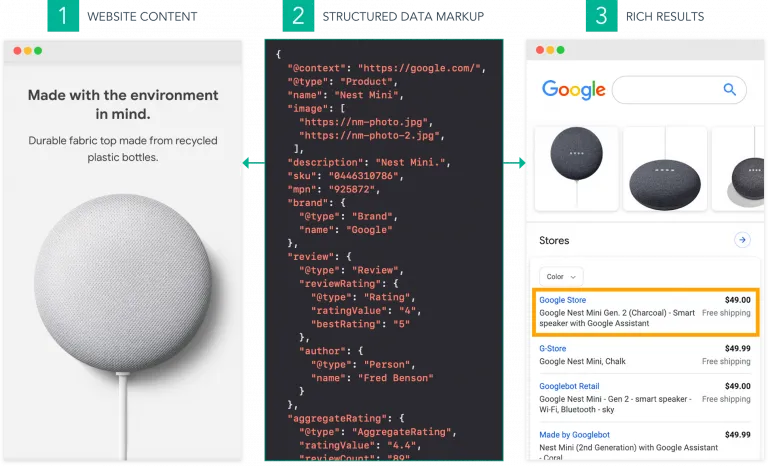
- Search engines include more information on the search results page for your content, like cooking time from a recipe page, location from an event page, or a review from a customer success page.
- These improvements help Google build a better, more accurate knowledge graph and knowledge panel about your brand.
- These improvements can lead to more ranking keywords because search engines associate your content with more topics and sub-topics.
- These improvements can lead to more organic impressions and organic clicks because search features like rich results help your content stand out in search and resolve queries faster.
HOW STRUCTURED DATA IMPROVES ON-SERP SEO
On-SERP SEO is the organic channel strategy of covering as much real estate as possible on the first search results pages for any of your target keywords in order to capture the attention and clicks of your target audience. This is done by qualifying for applicable SERP features, like Google Ads, Featured Snippets, Image Packs, and FAQs, in addition to ranking as highly as possible. Huckabuy Automated Structured Data improves On-SERP SEO by qualifying your content for over 30 rich results, also referred to as rich snippets, that maximize the functionality and visibility of your links with more actionable, appealing, and detailed information embedded directly in the search results. To see the impact in Google search, go Search Console and under Performance > Search Appearance, you can view a breakdown of all the rich result types like "How-Tos" and "FAQs" and see the organic impressions and clicks they drove for your content.

IS STRUCTURED DATA A RANKING FACTOR?
Structured data is not a direct ranking factor, but it is highly recommended by Google and indirectly helps your website improve rankings by enhancing visibility.
To reiterate, by presenting information in a machine-readable context, Search Bots are able to understand the meaning of your pages, match content with more relevant queries, and display applicable rich results as well. These all have indirect effects on ranking factors like click-through rate and direct traffic because Google uses the data to put your links in front of more qualified audiences and those links are enhanced by features like FAQs, ratings, and reviews that help customers solve their queries faster and entice visits to your pages.
Regardless of the ranking question, if your goal is to increase visibility in the SERPs and indirectly influence rankings, it is a critical asset to have on your website.
WHAT IS SCHEMA.ORG?
Schema.org is a community founded by the four major search engines - Google, Microsoft, Yahoo, and Yandex - with the intention of building a better semantic web by collaboratively developing schema vocabularies for structured data markup across the internet. A commonly used vocabulary in the form of schema.org types and properties makes it easy for marketers and website developers to participate in this initiative.
HOW DO YOU IMPLEMENT STRUCTURED DATA?
In order for structured data to be effective and recognized by search engines, and specifically by Google (international/worldwide market share of 87%), the structured data markup must describe the page content and include information that is visible to the user.
There are a number of ways that structured data markup can be implemented on a page but the recommended format is via JSON-LD.
JSON-LD is not meant to be seen by humans – it is designed for search engines. JSON is the text format and LD stands for linked data that allows you to express data in a way that is more precise to the individual entities. Think of it as a book. It’s written in a way you can map objects over pages. There is no parsing, guesswork, or filtering that needs to be done by search engines. Everything is very explicit – what you say means only what you say. It’s the cleanest way to communicate and that’s why Google prefers it and recommends it to SEOs.
There are other methods, including microdata, microformats, and RDFA, but these alternatives are mixed in with content shown to users which can complicate the goals of expressing data to search engines and providing a top-notch user experience. For the alternatives, like microformats, it’s like adding subtitles or creating transcriptions to something somebody wrote and hiding it in the HTML for Google to extract and decipher.
JSON-LD VS MICRODATA: WHICH SHOULD I USE?
Google supports both JSON-LD and Microdata structures. JSON-LD, a more lightweight solution, is Google's preferred data format.
From our perspective —and Google’s— there’s a clear winner: JSON-LD. It’s the most elegant and lightweight solution for structured data markup.
JSON-LD is a Javascript notation that annotates web content and can be templated across web pages, making it easy to add, edit, and remove. It’s not mixed in with user-visible text, and there’s no need to alter existing HTML tags — simply add JSON-LD to the script tag in your page head or body.
Example of how JSON-LD appears:

Microdata is a way to label various HTML elements on a page using machine-readable tags. Because microdata is embedded within the HTML source code of a web page, it takes more time to implement and is more difficult to edit and remove.
Example of how Microdata appears:

ADDITIONAL TOOLS AND RESOURCES FOR STRUCTURED DATA
Want to dive deeper into structured data? We’ve compiled our favorite learning resources, tips, and SEO tools to test your structured data and learn more about the basics of the implementation process.
- Google Structured Data Testing Tool
- Google Structured Data Markup Helper
- Google Rich Results Testing Tool
- Google Codelab Structured Data Tutorial
- Google Guide: Understand How Structured Data Works
- Schema.org
- Huckabuy Automated Structured Data
STRUCTURED DATA GLOSSARY
HTML
Hypertext markup language. HTML controls how a web page is structured (headings, paragraphs, etc.) and what it says (text).
JAVASCRIPT
A computer programming language used to create interactive/dynamic action on a website.
JSON-LD
JavaScript object notation for linked data. Google’s preferred format for structured data.
KNOWLEDGE GRAPH
In the context of SEO, a knowledge graph pulls information from a variety of sources, such as the CIA World Fact Book and Wikipedia, and presents them in knowledge panels located on the the right hand rail of search results pages.
MICRODATA
A way of annotating HTML elements with machine-readable tags, microdata is another type of format for structured data.
OPEN GRAPH
Integrates website content with social media platforms, like Facebook and Twitter, by tagging content such that it can be presented and shared in a native format alongside other objects on those platforms.
RDFA
Resource description framework in attributes. Another format for structured data.
RICH CARDS
A separate result, often with visual enhancements, appears at the top of a search results page.
RICH RESULTS
An umbrella term that includes all types of search result features and enhancements.
RICH SNIPPETS
Any type of organic search result listing with enhanced information displayed alongside the url, title, and description. Sometimes used interchangeably with "rich results".
SCHEMA MARKUP
Another way of saying structured data.
SCHEMA.ORG
An extensive labeling system, created by the major search engines in 2011, that standardizes how web content is marked up. This shared vocabulary makes websites easier for search engines to understand.
SEARCH BOTS
Search engine crawlers (also known as spiders) that go through the Internet to find content. Each search engine has its own name for its bots: Googlebot, Bingbot, etc.
SERP
Search engine results pages.
STRUCTURED DATA
Endorsed by Google, structured data is the language of search engines. It explicitly tells them what is on a webpage so they can properly understand and contextualize content.
STRUCTURED DATA ARTICLES
STRUCTURED DATA & SCHEMA.ORG
Schema.org is a community founded on June 2, 2011 by Google, Microsoft, Yahoo, and Yandex with the initiative of collaboratively developing schema vocabularies for structured data markup on web pages, emails, the internet, and more. This shared vocabulary creates ease for marketing and website developers to maximize their efforts and the benefits of those efforts.
To help search engines in understanding each page on your site, you should implement structured data (SD) to provide context to the site’s content in an authoritative way. Read more to learn why you need to get SD on your site (the benefits) and to learn about the general guidelines of SD markup.
UNDERSTANDING THE STRUCTURED DATA VIEW IN THE HUCKABUY DASHBOARD
In order to get full value out of our Dashboard, it’s important that you as a customer can understand the information being presented to you when you navigate to the different views available within it. Once you have installed Huckabuy SD markup to your website, you will be able to keep track of the number of structured data objects you currently have in use. This article will explain how to navigate the structured data page in the dashboard and export reports.